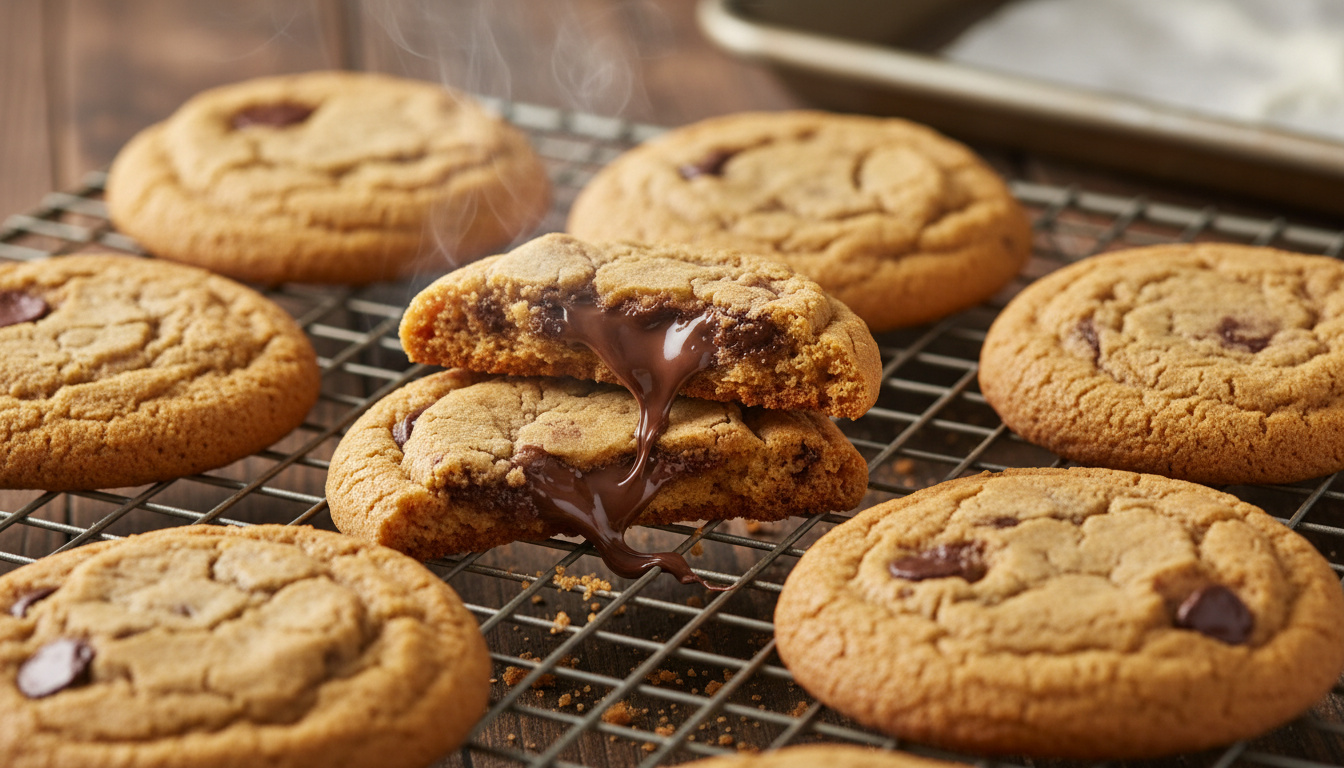
The chocolate chip cookie remains the definitive American baked good, distinguished by the precise interplay between a yielding center and caramelized edges. Achieving this textural balance requires understanding the molecular behavior of ingredients rather than relying on intuition alone.
Contemporary recipe development has evolved beyond the original 1930s Nestlé Toll House formula, incorporating scientific insights into moisture retention and protein structure. Analysis of high-performing recipes—including one formulation by Sally’s Baking Addiction that has generated over 30 million online engagements—reveals consistent patterns in ingredient ratios that produce thick, bakery-style results without specialized equipment.
This examination synthesizes testing data from multiple expert sources to establish a reproducible framework for consistent, professional-quality cookies at home.
How to Make Classic Chocolate Chip Cookies
| Prep Time: 15 minutes | Cook Time: 11-13 minutes | Yield: 20-30 cookies | Difficulty: Easy |
Consistent results depend on specific chemical interactions between fats, sugars, and proteins. The following principles emerged from comparative testing across high-traffic recipe platforms:
- Brown sugar must exceed white sugar by a minimum 3:2 ratio to retain moisture and prevent excessive spread
- Cornstarch at 1-1.5 teaspoons per batch limits gluten development, creating tenderness without cakiness
- An additional egg yolk increases fat content and emulsification without adding leavening structure
- Melted butter, cooled 5-10 minutes, creates a denser dough matrix than creamed butter
- Minimum 30 minutes chilling firms fat and hydrates flour, preventing flatness
- Tall, irregular dough balls (1.5-2 tablespoons) generate bakery-style height and crackled surfaces
- Underbaking by 60-90 seconds preserves chewy centers while edges set
| Ingredient | Amount | Purpose |
|---|---|---|
| All-purpose flour | 2-2.75 cups (spooned & leveled) | Structural framework |
| Baking soda | 1 teaspoon | Alkaline leavening |
| Cornstarch | 1-1.5 teaspoons | Tenderness/Thickness |
| Salt | 1/2-1 teaspoon | Flavor enhancement |
| Unsalted butter | 3/4-1 cup (melted, cooled) | Fat/moisture base |
| Brown sugar (packed) | 3/4-1.25 cups | Hydration/chewiness |
| Granulated sugar | 1/2 cup | Spread/crisp edges |
| Egg (whole) | 1 (room temperature) | Binding/protein |
| Egg yolk (additional) | 1 | Richness/texture |
| Vanilla extract | 1.5-2 teaspoons | Aromatic compounds |
| Semi-sweet chocolate chips | 1.25-2 cups | Primary inclusions |
Tips for Soft and Chewy Chocolate Chip Cookies
Achieving a chewy texture requires manipulating moisture retention and gluten formation. Chewy Chocolate Chip Cookies consistently rank among the most tested formulations for this specific texture profile.
Sugar Ratios and Hydration
Brown sugar contains molasses, which attracts and retains water molecules during baking. Recipes utilizing 3/4 cup brown sugar to 1/2 cup white sugar, as documented by The Kollee Kitchen, demonstrate superior moisture retention compared to equal-ratio formulations. The hygroscopic properties of molasses prevent rapid moisture loss during cooling.
The Role of Cornstarch
Cornstarch interferes with gluten strand formation when combined with flour. At concentrations of 1-1.5 teaspoons per 2.25 cups flour, it creates a tender crumb structure without the grittiness associated with over-leavening. This technique appears in formulations by Beyond Frosting and multiple expert sources.
Egg Composition
The inclusion of one additional yolk—beyond the standard whole egg—increases the fat-to-protein ratio. This adjustment, emphasized by video testing documentation, provides emulsification and richness without the additional moisture of egg white, which can contribute to cakiness.
Chill dough for a minimum of 30 minutes, or overnight for optimal texture. This solidifies melted butter, slows spread during the initial oven spring, and allows flour hydration to complete, resulting in thicker, more complex flavor development through enzymatic activity.
Why Do Chocolate Chip Cookies Spread or Go Flat?
Excessive spreading typically results from thermal or chemical imbalances rather than single-ingredient failures. Understanding the interaction between fat temperature and sugar dissolution prevents common structural collapses.
Thermal Dynamics
Butter has a melting point of approximately 90-95°F (32-35°C). Dough entering an oven above this temperature threshold melts too rapidly, creating a pool of fat before the protein structure sets. Completely Delicious notes that dough balls should feel cool to the touch before baking initiation.
Fat and Sugar Interactions
High ratios of white sugar or insufficient flour create excessive hygroscopic pull, causing cookies to spread thin before the egg proteins coagulate. Conversely, insufficient brown sugar reduces moisture retention, creating brittle rather than chewy flat cookies.
Leavening Agent Activity
Expired baking soda fails to produce adequate carbon dioxide, resulting in dense, greasy disks rather than lifted cookies. Testing freshness by adding baking soda to vinegar should produce immediate vigorous bubbling; delayed or weak reactions indicate replacement is necessary.
Placing dough on warm baking sheets causes immediate butter melting before oven insertion. Always cool sheets between batches, or rotate multiple sheets to maintain ambient temperature below 68°F (20°C) at baking initiation.
How to Store Chocolate Chip Cookies
Proper storage maintains texture differential between crisp edges and soft centers for extended periods. Soft and Chewy Chocolate Chip Cookies require specific humidity control to prevent staling or sogginess.
At room temperature, airtight containers preserve freshness for up to one week. Adding a slice of bread to the container introduces moisture without direct contact, maintaining pliability in the cookie centers. For extended preservation, baked cookies freeze successfully for up to three months in sealed freezer bags, thawing at room temperature without texture degradation.
Raw dough portions freeze optimally for three months when scooped into individual balls. Frozen dough testing demonstrates that baking directly from frozen states—adding 1-2 minutes to standard bake times—yields results nearly indistinguishable from fresh dough.
For immediate baking without chilling, cream room-temperature butter with sugars for 3-4 minutes until fluffy, then proceed with standard mixing. This mechanical aeration compensates for the lack of chilling time, as detailed by Pinch of Yum.
From Mixing to Cooling: The Complete Timeline
- Ingredient Combination (5 minutes): Whisk wet ingredients until lump-free, then integrate dry ingredients until thick, glossy dough forms
- Resting Phase (30 minutes minimum): Refrigerate dough to solidify fats and hydrate flour completely; overnight develops deeper flavor through enzymatic activity
- Portioning (5 minutes): Scoop 1.5-2 tablespoon portions, forming tall, irregular mounds rather than smooth spheres
- Baking (11-13 minutes): Bake at 350°F (177°C) until edges display golden caramelization while centers remain pale and puffy
- Structural Setting (10 minutes): Cool on baking sheets to allow carryover cooking and firming of chocolate; centers will appear underdone initially but set upon cooling
Established Techniques vs. Situational Variables
| Verified Protocols | Variables Requiring Adjustment |
|---|---|
| Brown sugar exceeding granulated (minimum 3:2 ratio) | Exact bake duration for convection ovens (reduce by 2-3 minutes) |
| Cornstarch inclusion at 1-1.5 tsp per batch | Altitudes above 3,000 feet (increase flour by 2-3%) |
| Additional egg yolk per batch | Ambient humidity levels affecting flour absorption |
| 350°F (177°C) baking temperature | Dark vs. light baking sheet heat retention |
| 30-minute minimum chilling requirement | Specific chocolate chip brand melting points |
| Underbaking until centers appear slightly raw | Individual oven calibration variations |
The Chemistry of Texture Development
The Maillard reaction—responsible for the golden-brown exterior—occurs between amino acids and reducing sugars at temperatures exceeding 300°F (149°C). This creates hundreds of flavor compounds distinct from caramelization, which requires higher temperatures and affects sugars exclusively. The interplay between these reactions generates the complex flavor profile associated with premium chocolate chip cookies.
Sugar crystallization during cooling determines final texture. Brown sugar’s fructose and glucose remain hygroscopic after baking, maintaining moisture within the crumb structure. White sugar, conversely, recrystallizes upon cooling, contributing to the snap of crisp edges. In Bloom Bakery emphasizes that using chocolate chunks rather than uniform chips creates irregular molten pockets that disrupt crystallization patterns, enhancing chewiness.
Methodologies Behind the Recipes
“The secret to thick cookies without a mixer lies in melted butter cooled just enough to avoid cooking the egg, combined with an extra egg yolk for chewiness. Tall dough balls and a hot oven create that bakery-style lift.”
— Sally’s Baking Addiction, tested to 30 million views
“Cornstarch is the hidden ingredient in chewy cookies. It acts as a tenderizer by limiting gluten development, giving you that thick, chewy texture without the cakey consistency.”
— Multiple source aggregation from expert testing
Final Recommendations
Consistent bakery-quality results require adhering to specific ratios: more brown sugar than white, the addition of cornstarch, an extra yolk, and mandatory chilling. Chewy Chocolate Chip Cookies demonstrate that these modifications to the classic formula produce measurable improvements in texture and height. Avoid overbaking; cookies continue cooking on hot sheets after removal, achieving optimal chewiness only after complete cooling.
Frequently Asked Questions
Can I use bread flour instead of all-purpose?
Bread flour contains 12-14% protein versus all-purpose’s 10-12%, creating more gluten and potentially tougher cookies. If substituting, reduce mixing time significantly or decrease flour volume by 1-2 tablespoons per cup.
Why press extra chocolate chips on top after baking?
Embedding additional chips within the first 60 seconds of removal—while the surface remains soft—creates visual bakery-style appeal and ensures chocolate exposure on the exterior without burning during the bake.
Is chilling the dough absolutely necessary?
While 30 minutes produces optimal thickness, a no-chill variation using creamed (not melted) butter whipped 3-4 minutes until fluffy yields acceptable results, though with slightly less complex flavor development.
How do I know when cookies are done if centers look raw?
Remove cookies when edges display golden-brown coloration and centers appear puffy but pale. Centers will appear underbaked but firm upon cooling; baking until centers appear set results in overbaked, crispy cookies.
What causes tough rather than chewy cookies?
Overmixing after flour addition develops excessive gluten strands, creating rubbery texture. Mix dry ingredients until just combined and shiny; the dough should remain thick and slightly sticky, not smooth.
Can I substitute coconut oil for butter?
Coconut oil substitutes at a 1:1 ratio for vegan adaptations, though it lacks water content present in butter. Cookies spread less but may lack the Maillard complexity; add 1 tablespoon water per 1/2 cup oil to compensate.

Liam O'Brien covers Australian politics and public affairs for Coast Pulse Hub.